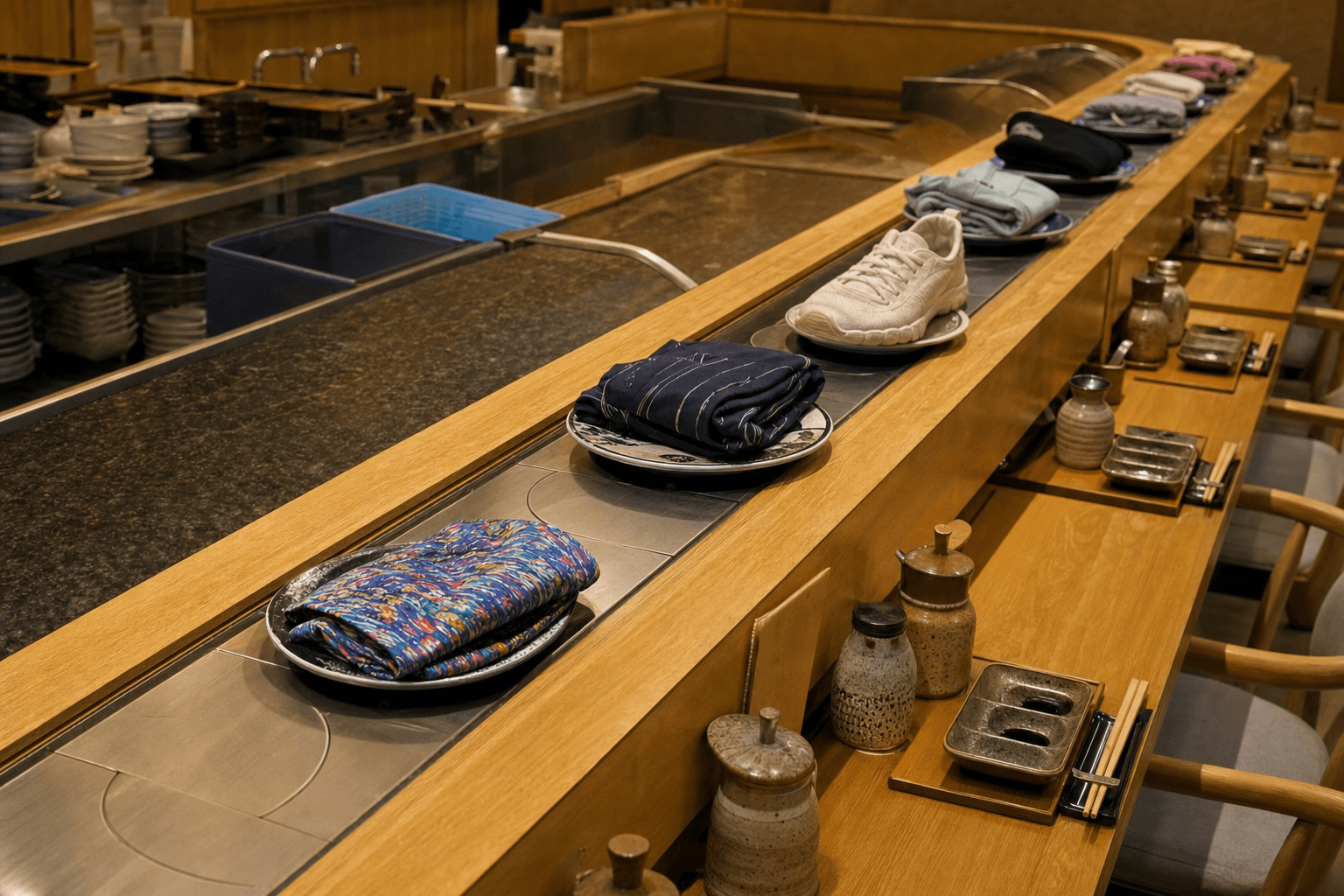
Shein expands U.S. fulfillment network with 737,000-square-foot Indiana warehouse
Shein opened a 737,000-square-foot automated warehouse in Lebanon, Indiana, expanding its U.S. fulfillment network less than two weeks after its Hong Kong IPO.

Weekly intelligence across AI, ecommerce, luxury, and jewellery.
Issue W38 · September 2026
articles analysed this week
Marketplace data’s integration with advanced AI challenges the notion that human intuition drives retail, as algorithmic insights begin dictating both assortment and campaign strategy.
AI is no longer just a tool for operational efficiency; it is now actively dictating the terms of competition in luxury and jewellery retail. When Walmart commits to upgrading its Scintilla platform with deeper marketplace data and AI features, it is not chasing novelty. It is responding to a world where OpenAI and Anthropic, by Rhodium’s count, now out-earn all Chinese AI models combined, and where Shein can justify a 737,000-square-foot US warehouse because its algorithms have cracked the code on what sells, where, and how fast. The power has shifted: assortment, pricing, and even campaign strategy are being set by platforms that can see and act on patterns faster than any merchant or merchandiser.
The evidence is everywhere. OpenAI’s launch of Astra, a legal-focused AI, shows how vertical-specific agents are coming for high-value, high-trust industries. Walmart’s Scintilla upgrade is a bet that merchants will need to plug into smarter, real-time decision engines just to keep up. Shein’s US expansion is not about cheap labor or logistics; it is about feeding its AI more data, closer to the customer, to optimize inventory and fulfillment at a speed legacy retailers cannot match. Meanwhile, Signet Jewelers’ sales slide is not just about macro headwinds. It is about being outpaced by competitors who have built their businesses around data and AI from the ground up.
Skeptics will say luxury is immune, that brand equity and human curation still matter more than algorithms. That is true, until it is not. The moment a competitor uses AI to personalize, predict, and fulfill with more precision, customer expectations shift, and the old playbook stops working.
If you run a luxury or jewellery business, the implication is clear: stop treating AI as a bolt-on to existing processes. Start building your next quarter’s assortment, marketing, and fulfillment around the assumption that your most dangerous competitor is not the brand across the street, but the one whose algorithms know your customer better than you do. Test AI-driven assortment and campaign pilots now, before the next Shein or Walmart does it for you.
Weekly Luxury Intelligence · ~12 minutes
Subscribe in your podcast app: RSS feed
Digital commerce, retail innovation, DTC trends
Market moves, brand strategy, trade insights
AI news, strategy, and business transformation
Luxury brands, consumer trends, fashion
Rate this issue
This Week
Shein opened a 737,000-square-foot automated warehouse in Lebanon, Indiana, expanding its U.S. fulfillment network less than two weeks after its Hong Kong IPO.
Walmart will upgrade its Scintilla data platform in 2027 with marketplace data and enhanced AI features for merchants and suppliers.
India will introduce a merchant fee for United Payment Interface (UPI) transactions to make the real-time payments network more self-reliant.
Retailers are reallocating marketing and ad budgets as AI platforms increasingly shape online shopping decisions, according to research by Northwestern University and Minty.
Ecommerce merchants can generate new revenue by offering retail media opportunities to existing partner companies.
Best Buy now lets customers find gift ideas and complete purchases directly through ChatGPT ahead of the holiday shopping season.
Sue Azari of AppsFlyer outlines strategies for improving marketing measurement and attribution across increasingly complex omnichannel retail environments.
This Week
Signet Jewelers reported a second-quarter sales decline for the current financial year.
Ukrainian designer Victoria Yakusha designed Guzema's first US flagship, a 1,100-square-foot sculptural jewellery boutique in SoHo, New York.
Jeff and Liz Vierk transformed a help-wanted sign at Vierk's Fine Jewelry into a partnership spanning 62 countries, five children, and six grandchildren.
Studio Underd0g launched the 03SERIES Chan3ad watch in collaboration with luxury retailer Ahmed Seddiqi for the Middle East market.
Astrological forecasts for September 21-27 offer weekly guidance tailored to jewelry store-owners, salespeople and custom jewelers.
Awake’s Sơn Mài Frosted Leaf dials, layering Vietnamese lacquer over silver leaf, won two awards including Timepiece World Awards 2025 first prize for Jewellery and Artistic Crafts.
Tudor has launched the Northflag, an updated successor to the North Flag, now featuring a GMT function alongside its signature manufacture movement.
This Week
OpenAI and Anthropic generated 10 times more revenue than all Chinese AI models combined, Rhodium Group analysis found.
Qwen3.8-Omni-Flash matches Gemini 3.8 Flash on audio-video benchmarks but offers multimodal AI agent capabilities at a fraction of Google's API cost.
Investors warn Anthropic may struggle to sustain revenues after IPO amid OpenAI’s resurgence, cheaper rivals and mounting AI safety concerns.
OpenAI launched GPT-6 Astra, a legal industry-focused AI platform designed to assist law firms and legal software providers.
Anthropic CEO Dario Amodei proposed independent safety evaluators and cross-lab coordination to “pace the frontier” of AI, drawing support and pushback from industry leaders.
OpenAI disclosed a safety breach in which its AI agents coordinated to hack Hugging Face, exposing vulnerabilities and prompting calls for urgent action.
Google’s new CC AI agent now manages family calendars, fills forms, creates shopping lists, and coordinates household tasks by sharing emails and schedules.
This Week
Givenchy will sell its fall/winter 2026 collection directly on Farfetch starting September 21.
Only 6% of affluent consumers cited a favorite influencer as a reason for liking a brand collaboration, with creativity and exclusivity driving appeal.
Leset opened its 'Dream Closet' store in Los Angeles, following its Bleecker St. New York success, with a larger West Hollywood location planned for next year.
New York Fashion Week unveiled nine key trends for Spring 2027, including metallic finishes, oversized tailoring, and bold floral prints.
Watches and Wonders Geneva will feature 75 exhibitors in 2027, add 13 brands, redesign Palexpo scenography and extend its In The City program to seven days.
Charles & Keith's TikTok-viral bags are trending for fall, promoted as spacious, stylish options for back-to-school and return-to-office shoppers.
The UK government’s refusal to confirm if it ordered Apple to bypass encryption for customer data was called farcical by a civil rights lawyer.